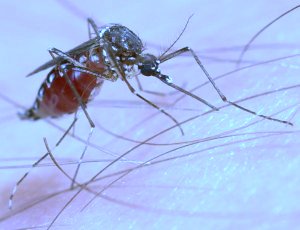
Malaria is transmitted by the Anopheles mosquito. When the female mosquito bites its host (the males are harmless) to get a meal of blood, it infects its host with the plasmodium protozoa. This single-cell organism attacks red blood cells causing fever, weakness, shaking, chills and, too often, death.
The disease is the leading cause of disease and death in some parts of the world. Its typically found in tropical and subtropical countries where higher temperatures allow these mosquitoes to thrive. More than half of the worlds population is at risk and the proportion increases each year because of inadequate health systems, growing drug and insecticide resistance and other reasons. In Africa, it kills one child every thirty seconds.
Scientists all over the world are working on developing a vaccine. But the malaria parasite is a complex organism with a complicated life cycle. Its antigens are constantly changing, making developing a vaccine very difficult.
PB

0 comments:
Post a Comment